
Aggression, childhood adversity, and the response to stress are all critical factors contributing to risk for suicidal behavior.
However, the relationships among these variables and their relative contribution to suicidal behavior are not well-understood, in part, due to limitations in measures. Conceptually, there may be multiple dimensions or subtypes of each that contribute to suicide risk in different ways.
Stress Responses, Childhood Adversity and Suicidal Behavior
The goal of this project is to
- characterize the extent and nature of aggressive behavior exhibited by participants,
- relate it to detailed assessments of types of childhood adversity as well as to situational, psychobiological responses to stress
- and ultimately relate all of these factors to suicidal behavior in suicide attempters and non-attempters with major depressive disorder, high-risk offspring of suicidal individuals, and healthy volunteers.
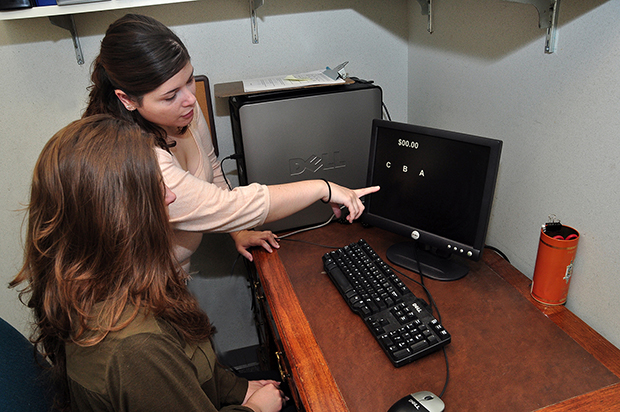
Aggressiveness will be assessed via interview, self report and a behavioral measure (Point Subtraction Aggression Paradigm) to characterize the reactive vs. proactive nature of the behavior.
While reactive aggression – characterized by acute responses to situational provocation and emotional volatility – is thought to underlie a substantial portion of suicidal behavior, proactive aggression – more deliberate behaviors with less overt emotional reactivity – has been less systematically studied, but has also been related to suicidal behavior. Our preliminary data indicates that the effect of past abuse on suicidal behavior is mediated by aggression.
Stress response will be assessed via behavioral and cortisol responses to the Trier Social Stress Test. Our preliminary data indicate that heightened cortisol response to this stressor is evident in those with high impulsive aggression, a group that does not encompass all suicide attempters.
Thus, there is a subtype of attempters who appear more sensitive to these situational stressors, and another subtype – currently less well characterized – that does not.
Ultimately, this project will make a major contribution toward characterizing alternative pathways to suicidal behavior, with potentially different underlying neurobiological mechanisms.
In conjunction with data from the PET and MRI projects of the Conte Center, these studies will identify relationships among these biological and behavioral measures that can provide targets for intervention more closely tailored to individual needs.
How To Participate In This Study
Please click here for information on how to participate in this study as a patient, individual with a family history of suicide, or healthy volunteer.